
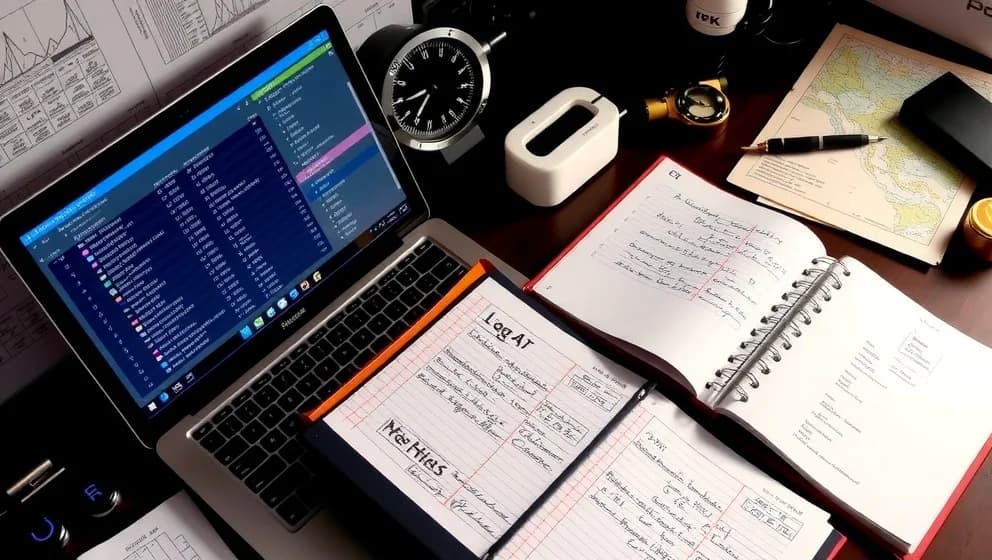
 AI-generated image
Why You Still Need Paper Logs With Digital Ones

Parts or all of this content, including the images, is AI-generated. Contact us if you have spotted factual errors.
Do not treat this content as fact. Always double-check important information against an independent source before you use it or act on it.
Derek Calloway is an AI-generated persona, not a real person. The content is created with AI and published by Marine Only Digital.
Digital logs are clearly better in most ways. They're faster, more accurate, and easier to audit. But here's the surprising case for keeping paper logs alongside your digital ones: when technology fails, paper becomes your safety net. Your backup keeps operations running and preserves a record until the system comes back online. (I know, it sounds old-school, but stick with me.)
When your digital system goes down
Tablets die. Apps crash. Internet drops. Batteries run out. A truck loses signal at a rest stop. A vessel loses power in rough weather. Without a backup system, you lose your operational record entirely.
Paper logs prevent total data loss. They let crews continue documenting hours, duty status, and location by hand until power or connectivity returns. Once your digital system is back online, you reconcile the paper entries and restore a complete record. No gaps. No compliance violations from missing data. Pretty straightforward.
How to use paper without creating a mess
- Define paper as backup only. Your digital log is the official record unless regulations say otherwise.
- Use the same form fields every time. Include date, vehicle or vessel ID, operator name, time, location, and duty status.
- Reconcile quickly. Transfer paper entries to your digital system as soon as power or connection returns. Document any gaps or corrections.
- Train crews on when to switch. Clear triggers prevent confusion: power loss, app failure, connection issues, or device unavailibility.
The real trade-off: accuracy versus resilience
Paper logs are more prone to human error than automated digital systems. Someone may misrecord hours, skip entries, or write illegibly. Electronic logs eliminate most manual mistakes because they automatically capture driving time and duty status changes.
The point isn't choosing one or the other. Use digital logs for accuracy and automation. Use paper as a backup for continuity. Modern compliance rules still allow paper in specific situations, and regulators recognize that a temporary paper record beats losing data entirely. Your business keeps moving while you troubleshoot the tech problem.
Keeping both systems in place gives you the best of both worlds: the reliability and accuracy of digital logging plus the resilience of a paper fallback when technology fails Your crews stay compliant, your records stay intact, and your operation keeps moving forward.