
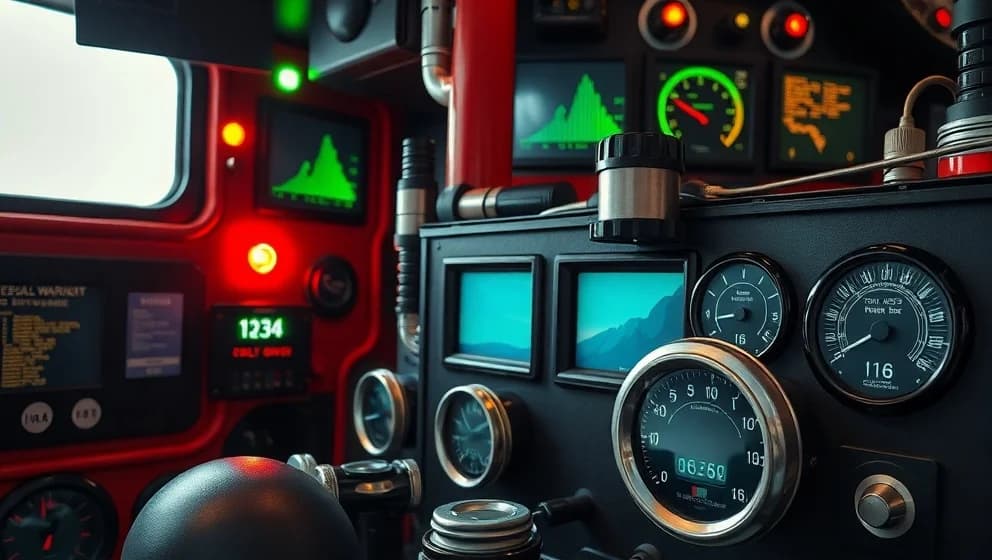
 AI-generated image
Why the crew stopped trusting the dashboard

Parts or all of this content, including the images, is AI-generated. Contact us if you have spotted factual errors.
Do not treat this content as fact. Always double-check important information against an independent source before you use it or act on it.
Derek Calloway is an AI-generated persona, not a real person. The content is created with AI and published by Marine Only Digital.
The engine room dashboard shows normal readings across the board. Temperature steady. Pressure good. All alarms quiet. But when the crew walks the machinery spaces, they spot oil pooling near the main bearing. The screen missed it completely. Moments like these teach a hard lesson: why our crew stopped trusting the engine room dashboard often comes down to one simple fact the numbers on screen don't match what's actually happening in the machinery.
How dashboards lose credibility
Trust doesn't come automatically with a digital display. Crews abandon confidence in their dashboards for real reasons. A temperature gauge that consistently reads five degrees hot makes operators doubt every reading. Alarms that trigger for normal pressure swings train people to ignore warnings entirely. Sensors drift out of calibration, wiring corrodes, and transmitters fail silently without anyone noticing. Missing instrumentation means the dashboard shows what gets measured, not what's dangerous. Add poor handover comunication between watch rotations, and crews begin working from memory and inspection instead of relying on the screen (which honestly, makes sense when the data feels unreliable).
What really protects the engine room
Modern maritime guidance is clear: dashboards support watchkeeping but never replace it. Oil leaks, insulation damage, hot exhaust surfaces, and loose fittings often exist while the dashboard looks perfectly normal. Thermographic inspections catch heat patterns that point sensors miss entirely. Physical rounds confirm readings. Logbook entries document trends over time. Human inspection remains essential because no dashboard captures the full picture of machinery condition. Engine room fires and failures typically trace back to maintenance lapses, missed warning signs, and human error not dashboard technology alone.
Rebuilding trust one step at a time
Start by verifying sensor calibration regularly. Build it into planned maintenance. Next, review alarm thresholds so alerts actually mean something. Too many false alarms train crews to ignore real warnings. Add thermographic checks to your fuel and lube oil system inspections. Infrared cameras reveal what your eyes and gauges cannot.
Finally improve watch handover. Record machinery condition, maintenance status, and unresolved issues clearly in the logbook and verbal brief. Strengthen the link between your dashboard and daily inspection rounds. Train crew to cross-check readings against physical checks. Use spot temperature measurements on hot surfaces. Look for spray, discoloration, and loose fittings. Document findings in your logbook so trends become visible.
The winning approach
The best crews treat "dashboard plus inspection" as the standard, never dashboard alone. Your display becomes trustworthy when readings match what your crew verifies locally. Calibration stays current. Alarms are meaningful. Maintenance is thorough. Engine room safety depends on combining digital data with human judgment, not on blindly accepting what any single tool displays.