
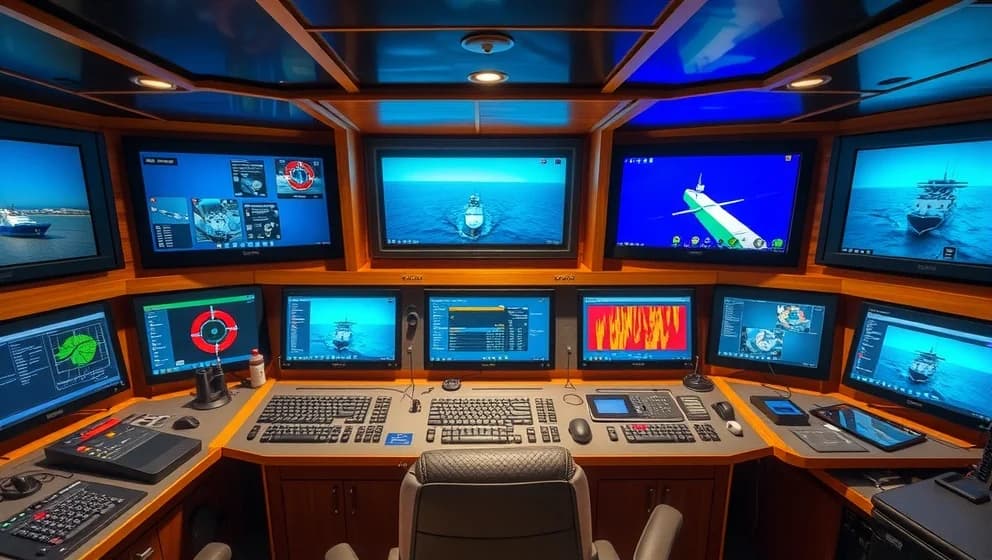
 AI-generated image
Why ship cybersecurity matters to everyone on board

Parts or all of this content, including the images, is AI-generated. Contact us if you have spotted factual errors.
Do not treat this content as fact. Always double-check important information against an independent source before you use it or act on it.
Derek Calloway is an AI-generated persona, not a real person. The content is created with AI and published by Marine Only Digital.
A ship's navigation system suddenly goes dark. The crew loses GPS data mid-ocean. They call IT, but here's the problem: cybersecurity on ships isn't an IT problem. A compromised system doesn't break a computer it breaks how the vessel operates. The bridge team makes decisions based on false sensor data. The engine room loses control of propulsion. Cargo systems freeze. When cyber attacks affect navigation, safety, and operations, you need ship officers and engineers, not just network technicians.
What actually runs your ship
Modern vessels depend on interconnected systems: ECDIS (electronic chart displays), GPS, radar, AIS, propulsion controls, and ballast systems. A cyber attack on any one of them creates real physical consequences. Wrong navigation data sends the ship off course. Compromised propulsion controls can stop engines unexpectedly (which is terrifying if you think about it). False sensor readings mislead the bridge team into unsafe decisions. These aren't digital problems isolated in a server room they're operational hazards that affect crew safety and cargo delivery.
What regulators expect from you now
The U.S. Coast Guard's cybersecurity rule changed the game. Covered maritime entities must report incidents by July 2025, complete crew training by January 2026, and establish formal cybersecurity governance by July 2027. Regulators now treat maritime cyber risk as an operational issue, not back-office IT. Your deck officers, engineers, and communications staff need training. Your incident response plan must be tested. Your networks must be seperated passenger wifi away from bridge systems, admin systems away from navigation.
Three actions to take today
Separate your networks. Passenger internet, crew welfare systems, and administrative functions should never touch operational systems. A compromise in crew wifi stays in crew wifi, not spreading to the wheelhouse.
Control vendor access. Remote maintenance accounts are convenient but they're also entry points. Know who has access to your systems, when they access them, and what they can change. Require strong authentication and audit all remote sessions.
Maintain manual fallbacks that work. Paper charts, printed procedures, offline navigation tools these aren't outdated. They're your backup when cyber incidents happen. Test them regularly so crew knows how to use them under pressure. Don't assume crew will improvise correctly in an emergency.
Maritime cybersecurity works when ship operators treat it like any other operational safety system. It requires crew training, engineering involvement, and bridge-team awareness. Partner with your shore team, your vendors, and your classification society. Build your incident response plan before you need it. Cybersecurity on your vessel isn't a technology department responsibility it's a captain's responsibility.