
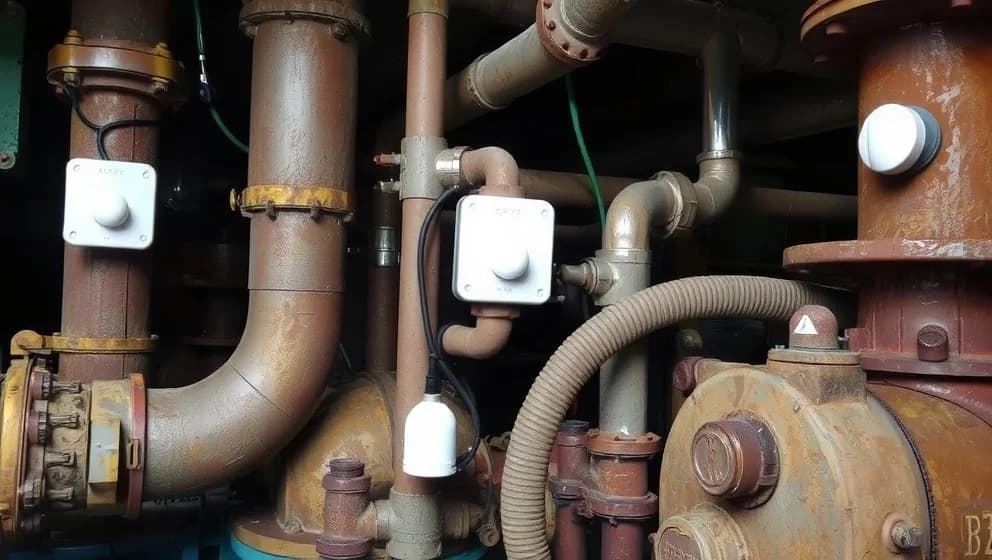
 AI-generated image
What broke first when we added IoT sensors

Parts or all of this content, including the images, is AI-generated. Contact us if you have spotted factual errors.
Do not treat this content as fact. Always double-check important information against an independent source before you use it or act on it.
Derek Calloway is an AI-generated persona, not a real person. The content is created with AI and published by Marine Only Digital.
We retrofitted a 12-year-old vessel with IoT sensors. Here's what actually broke first and it wasn't the sensors. Within weeks, mounting brackets loosened, power signals turned noisy, and connectivity dropped in the engine room. The equipment worked fine. The systems around it didn't. If you're planning a retrofit, understanding what actually fails first will save you time, money, and frustration.
The real culprits: mounting, power, and connectivity
Sensor chips rarely fail on retrofit vessels. Instead, four weak spots break almost immediately.
Mounting fails fast. A vibration sensor on the main engine shook loose after two weeks because adhesive alone couldn't handle constant vibration and salt spray. Brackets corroded. Thermal cycling cracked mounting surfaces. No amount of clever analytics fixes a sensor that's not properly attached to the equipment.
Power and grounding create noise. Noisy electrical signals cause sensor resets and false alarms. Ships generate electrical interference everywhere (seriously, everywhere). Without clean power paths and proper grounding, your sensors read garbage.
Connectivity dies in metal boxes. Shipboard metal obstructions block wireless signals. Legacy network gear can't handle modern data streams. Gateways that translate old equipment into modern formats often sit in radio dead zones, which is frustrating.
Calibration drift shows up immediately. Sensor readings don't match handheld measurements. Your baseline data was never actually good. This problem surfaces fast and exposes everything else.
How to avoid these failures on your next retrofit
Start small. Pilot one vessel section instead of retrofitting everything at once. Run your electronics and monitoring systems in one area first.
Validate mounting before running analytics. No model can fix bad physics. Check that sensors sit properly on equipment. Use mechanical coupling, not just tape.
Use gateways for legacy equipment. Don't force old devices into cloud-native architectures. Protocol bridges translate older signals into modern formats without replacing control systems.
Check power and grounding early. Compare sensor output against handheld instruments during setup. Verify electrical paths. Bad power breaks everything downstream.
Make cybersecurity a retrofit requirement. Change default gateway passwords. Segment network traffic so legacy systems stay isolated. Encrypt sensor data. Disable unused services. Security patches are part of instalation, not an afterthought.
Tie alerts to maintenance action. Sensors that don't connect to your CMMS or work orders produce noise, not value. Crews need clear workflows to act on alerts.
Retrofits work when you treat them as systems integration projects, not sensor installation projects. Every failure point connects to the others. Fix one in isolation and another breaks. Take your time during setup, validate everything against known instruments, and remember that the sensor itself is usually the last thing that goes wrong.