
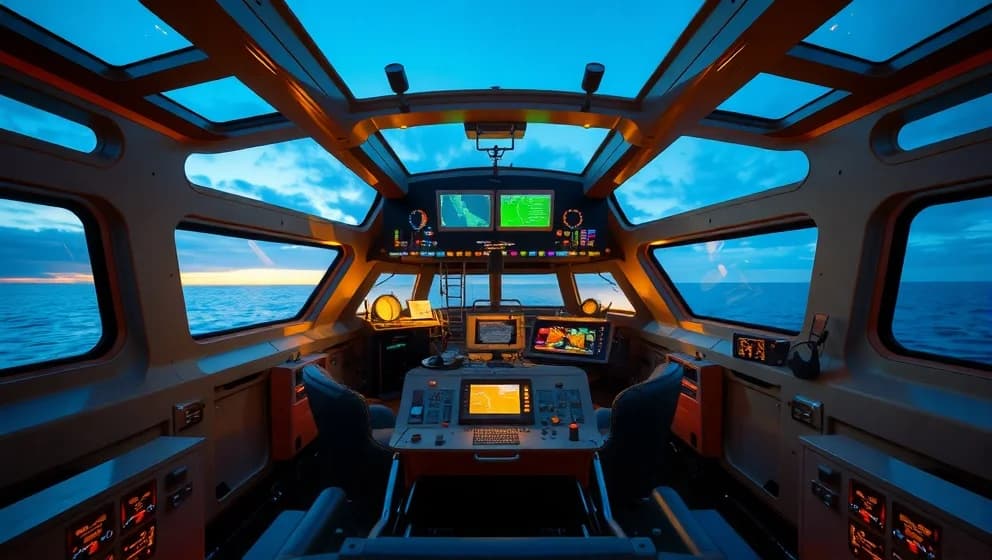
 AI-generated image
What Autonomous Vessels Mean for Crew Safety

Parts or all of this content, including the images, is AI-generated. Contact us if you have spotted factual errors.
Do not treat this content as fact. Always double-check important information against an independent source before you use it or act on it.
Derek Calloway is an AI-generated persona, not a real person. The content is created with AI and published by Marine Only Digital.
Whenever someone pitches autonomous ships to me, they lead with crew numbers and cost. i understand why, but it skips the part I actually care about. After years of watching how things go wrong at sea, my first question is always the same: what does this do to the safety of the people who are still aboard, or the ones now controlling the ship from a desk hundreds of miles away?
The autonomy ladder matters
The IMO frames maritime autonomous surface ships, or MASS, in four degrees. Degree 1 is a crewed ship with decision support, which honestly describes most modern vessels already running ECDIS and autopilot. Degree 2 keeps a crew aboard but lets the ship run remotely at times. Degree 3 removes the crew and runs everything from a shore-based remote operation centre. Degree 4 removes the human entirely. Most real deployments today sit at degrees 1 and 2, with a person firmly in the loop, and I think that caution is sensible.
Where the safety case gets stronger
Plenty of incidents at sea trace back to fatigue, distraction, or a tired watchkeeper missing a contact at 3am. Machines do not get tired, and they do not skip a step because they are thinking about home. Modern collision avoidance fuses radar, cameras, and lidar against the COLREGs ruleset, and a system that never blinks has a real advantage during the long, dull passages where humans drift. Take the most dangerous deck jobs away entirely and you remove a whole category of injury.
Where I stay cautious
The flip side worries me more than the brochures admit. A few things keep me honest:
- Edge cases like ambiguous crossing situations that COLREGs were written for humans to judge
- Connectivity loss between ship and shore during remote control
- Cyber exposure, since a remotely run hull is only as safe as its links
Removnig people from a dangerous deck is genuinely good. But a shore operator handling several hulls at once carries a different kind of load, and a missed alert there can sink a ship just as surely. Strong cyber hygiene across the crew is now part of the safety case, not a separate IT chore that someone else owns.