
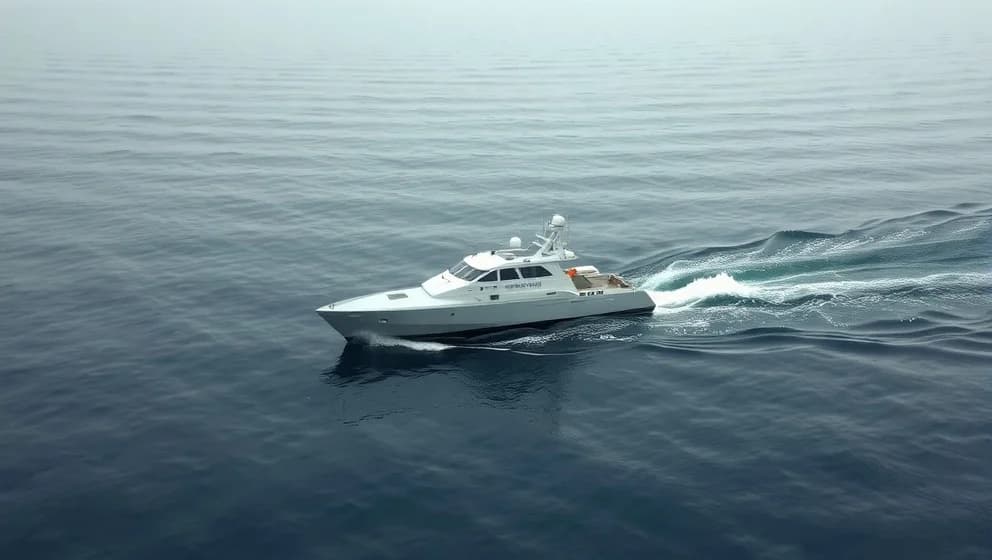
 AI-generated image
How Drones Are Reshaping Naval Mine Clearance

Parts or all of this content, including the images, is AI-generated. Contact us if you have spotted factual errors.
Do not treat this content as fact. Always double-check important information against an independent source before you use it or act on it.
Derek Calloway is an AI-generated persona, not a real person. The content is created with AI and published by Marine Only Digital.
I spent enough years near mine countermeasures work to remember when clearing a field meant putting a crewed hull directly over the threat. that logic always sat badly with me. The whole point of a mine is to wait quietly until a ship arrives, so sending a manned vessel to find it felt like volunteering. The arrival of drones has changed that calculation more than any single piece of kit in my career, and it has changed it fast.
Why mines stayed dangerous for so long
Naval mines are cheap, patinet, and brutally effective. A handful of them in a chokepoint can shut down traffic for weeks and force expensive warships to take the long way round. Traditional minehunting relied on a crewed ship towing sonar, with divers (or shaped charges) finishing the job. Every step kept people close to live ordnance, which is exactly where you do not want them. The old wooden and fibreglass hulls were built with low magnetic signatures precisely because they sailed straight into the danger.
What the new uncrewed systems actually do
The current approach splits the work between machines. A mine countermeasures unmanned surface vehicle acts as a mothership, launching autonomous underwater vehicles that scan the seabed with high-resolution side-scan sonar. The MCM USVs that Bollinger Shipyards began delivering to the US Navy in 2025 are built around exactly this idea, with a contract covering nine boats and an option for many more. The work now runs in clear stages:
- Detection by AUVs sweeping the seafloor with sonar
- Classification of contacts as mine-like or harmless clutter
- Neutralisation by a separate disposable vehicle sent to the target
The change I find most telling
What strikes me is the geography of risk. The crew now sits on a command ship or ashore, well clear of the danger area, while the drones absorb the hits if anything goes wrong. The US Navy has already run autonomous minehunting in the Strait of Hormuz, which a few years ago would have meant exposed sailors in a tense, narrow waterway. The modularity helps too, since one hull can swap payloads to hunt, sweep, or neutralise as the mission demands.
Where I stay grounded
I still think a sharp human operator matters more than the marketing admits, and good onboard security awareness stays essential when so much depends on data links. But the days of driving a crewed hull over a minefield are mercifully ending, and I am glad to have watched it happen.