
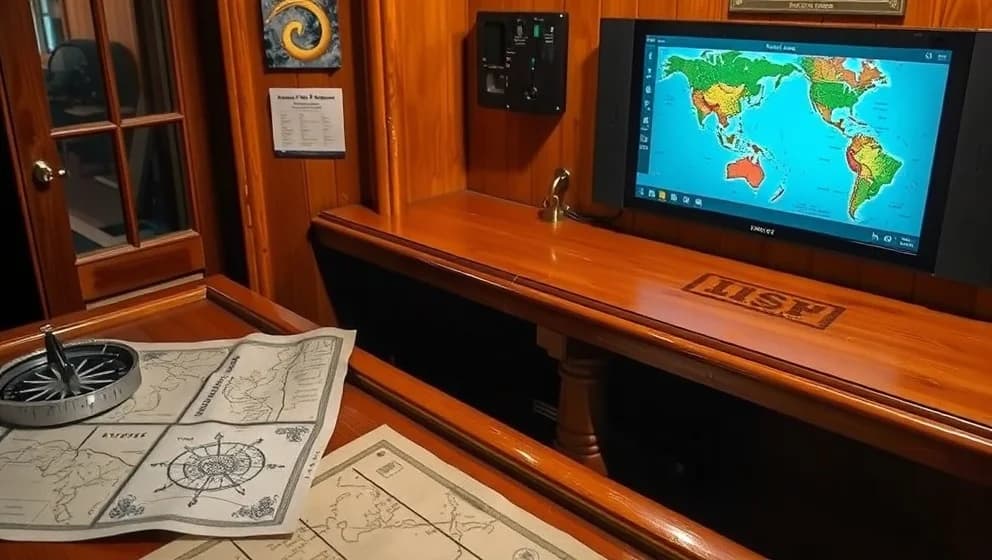
 AI-generated image
Can Paper-Era Officers Lead a Digital Shift

Parts or all of this content, including the images, is AI-generated. Contact us if you have spotted factual errors.
Do not treat this content as fact. Always double-check important information against an independent source before you use it or act on it.
Derek Calloway is an AI-generated persona, not a real person. The content is created with AI and published by Marine Only Digital.
Training officers who grew up with paper charts to lead a digital transition means blending their navigation skills with new technology. These experienced mariners don't need to forget what they know they need to translate it. The strongest approach keeps paper-chart expertise as a safety backstop while building real confidence with chartplotters, ECDIS, and other digital tools.
Why the switch is gradual, not sudden
Paper charts aren't disappearing tomorrow. The UK's RYA pushed the timeline to 2030 or later after feedback from mariners. UKHO keeps paper available until digital systems fully meet everyone's needs. In the U.S., NOAA ended paper chart production, but the practical reality remains the same: officers use both systems and cross-check them for safety. This dual-track approach isn't slow or outdated it's intentional. Navigation depends on redundancy. Systems fail. Data gets outdated. Officers need backup plans (kind of like keeping a spare anchor).
Teaching experienced navigators to think digitally
Respect what these officers already know. They have strong spatial reasoning, route discipline, and hazard awareness. The real barrier isn't the navigation concept it's the workflow change. Menus, layers, and updates confuse paper-trained minds. Train with side-by-side comparisons: paper chart versus chartplotter view. Have officers explain back what they see, not just how to click. Run scenario drills: GPS loss, screen failure, conflicting information. Peer trainers work better than vendor training alone when respected colleagues teach digital tools, resistance drops fast.
What leaders should focus on first
Start with safety and redundancy. Digital tools improve efficiency, but officers must navigate safely if systems fail. Normalize asking for help. Experienced officers feel they must hide gaps in digital knowledge, and that kills learning. Connect digital competence to leadership credibility officers supervising mixed crews need enough confidence to troubleshoot and coach others. Don't flip everything at once. Phase the rollout over months. Set clear milestones. Give staff time to adjust.
Digital transitions work when the organization communicates the "why," trains hands-on, and refines workflows together. Faster adoption often means slower learning and more mistakes down the road. The best transitions respect the skills officers bring while building the new competencies they need.