
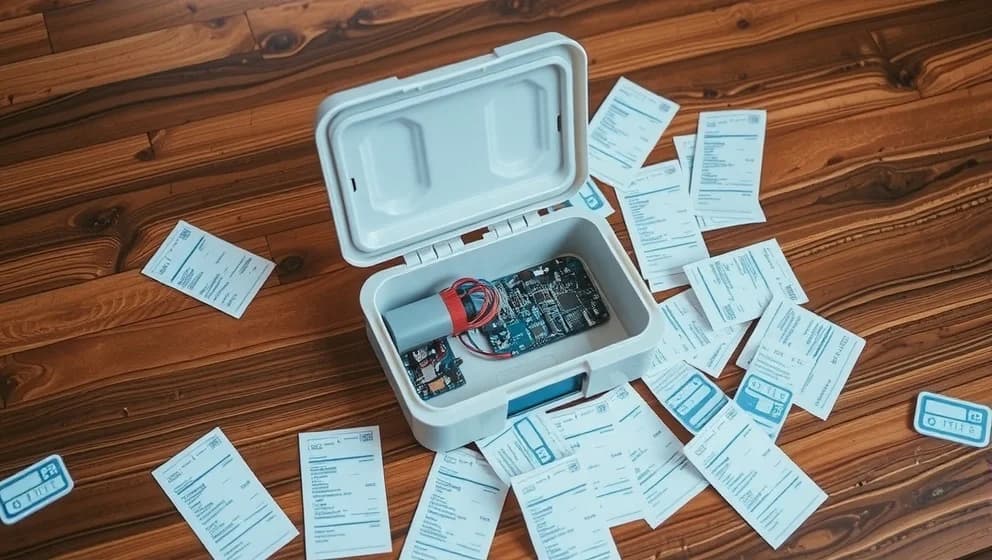
 AI-generated image
What smart containers really cost you

Parts or all of this content, including the images, is AI-generated. Contact us if you have spotted factual errors.
Do not treat this content as fact. Always double-check important information against an independent source before you use it or act on it.
Derek Calloway is an AI-generated persona, not a real person. The content is created with AI and published by Marine Only Digital.
Smart shipping containers promise real benefits: better tracking, improved security, and less spoilage. Companies see a $100 device and think the cost is low. Then they get the bill. The hidden cost of "smart" containers nobody warned us about reveals the truth: that device ends up costing $300 per month to actually run.
The real price tag behind the device
Hardware costs only $80 to $130 per container. That sounds reasonable until you do the math. A fleet of 5 million containers means $400 million upfront roughly 10% of Maersk's annual profit.
But hardware is just 10% of the problem. Monthly expenses add up fast: connectivity fees ($2 $5), software subscriptions, maintanence, and battery replacement every 7 12 years. Over a container's lifetime, the real cost skyrockets. One industry guide puts total monthly operating costs at $100 $300 per container depending on features and service level.
Large carriers hesitate to adopt because the numbers don't look attractive anymore once you count everything.
Hidden costs that surprise most companies
Beyond connectivity and software, expenses pile up in unexpected places. Installation labor adds cost when retrofit containers need mounting. Integration with your existing systems your TMS, ERP, customs software requires engineering work. Training staff to respond to temperature alerts takes time and attention. (I've seen companies underestimate this part pretty badly.)
Interoperability problems create extra burden. When your container system doesn't talk smoothly with your other systems, someone has to manually move data around. A pharma shipment needs temperature monitoring plus compliance software integration suddenly the project is much larger than you thought.
Cybersecurity setup is essential but often overlooked. Connected containers expand your attack surface. Device authentication, secure updates, and access controls all cost money and resources that most companies forget to budget.
When smart containers actually make sense
Smart containers work best for high-value cargo, perishables, regulated shipments, and theft-prone routes. The ROI calculation becomes clear: avoided spoilage plus reduced claims plus faster response justifies the investment.
Start with one high-risk lane. Track what you save prevented damage, fewer exceptions, faster problem detection. Measure real dollars. Then decide whether to expand across your network.
Built-in smart containers (new containers with sensors integrated from the factory) cost less to deploy than retrofit units because you eliminate installation labor. This shift is happening now and makes adoption more practical for large-scale operations.
Smart containers aren't magic. They're tools that work when the economics make sense. Know your cargo value. Know your risk. Then calculate whether visibility is worth the price.