
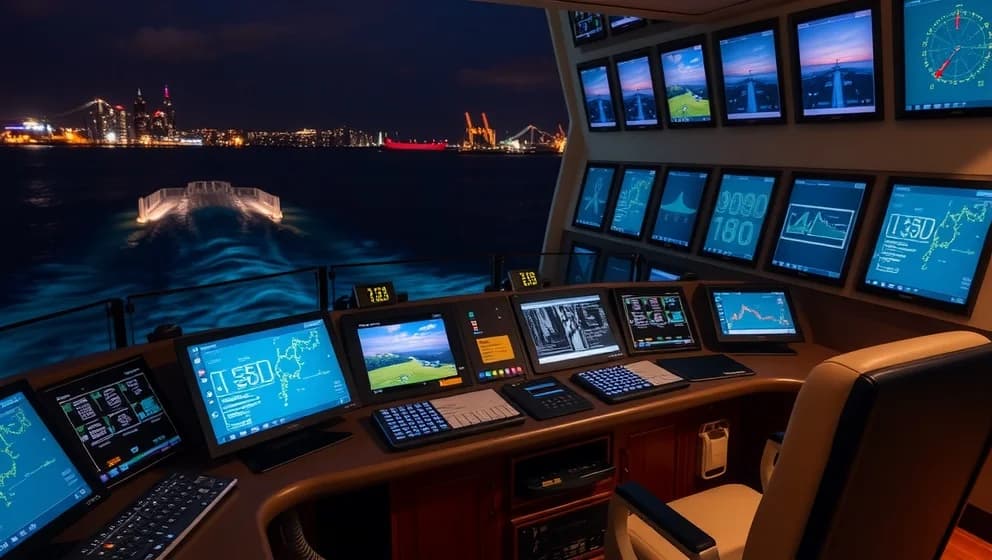
 AI-generated image
What port digitalization actually looks like on the water

Parts or all of this content, including the images, is AI-generated. Contact us if you have spotted factual errors.
Do not treat this content as fact. Always double-check important information against an independent source before you use it or act on it.
Derek Calloway is an AI-generated persona, not a real person. The content is created with AI and published by Marine Only Digital.
A pipe leaks in an undigitalized port. Nobody notices for days. The same leak happens in a digitalized port, and monitoring systems catch it in minutes. That difference between slow discovery and instant awareness is exactly what port digitalization looks like from the bridge, not the boardroom. It's not about fancy strategy or transforming your business model. It's about crews getting better data faster so they can make smarter decisions.
How digitalization changes what happens on arrival
Bridge teams notice real operational shifts. Berth planning becomes clearer instead of surprising. Port coordination happens through shared digital systems rather than email chains and radio calls. Instead of waiting for updates, crews see real-time status information about berth availablity, terminal readiness, and cargo sequencing.
When a vessel approaches, the captain receives reliable ETAs and confirmed berth windows days before arrival. Gate systems use digital bookings and license plate recognition, reducing congestion and guesswork. Cargo tracking shifts from phone calls to live data. Fewer manual handoffs mean fewer errors and faster problem-solving when disruptions occur.
What bridge teams need to know to make it work
Digitalization only helps when crews understand what they're looking at. Treat digital tools as decision support, not replacements for judgment. Your experience still matters more than any screen (honestly, that never changes).
Before relying on port data, verify its quality and timeliness. Check that vessel, terminal, and authority systems actually agree. Expect more pre-arrival coordination digitalization increases information sharing requirements. Share accurate voyage, cargo, and crew details early.
Plan for connectivity loss. Digital workflows fail without reliable networks. Keep fallback procedures ready for when systems degrade or fail completely. The bridge team that prepares for lost connectivity avoids surprises when it happens.
Why it matters right now
Port digitalization progresses in stages. Yard operations mature first, followed by gate flow and stakeholder integration. Equipment automation lags behind. Most ports operate in mixed states some systems digital, others still paper-based.
For mariners the practical benefit is clearer: real-time situational awareness reduces uncertainty. Better planning means smoother port calls. Faster exception detection means quicker response to leaks, equipment failures, or schedule changes. Digital tools let you see problems developing instead of discovering them after they cascade.
But none of that works without connectivity. None of it works without data quality. And none of it replaces the judgment crews develop over years at sea.
Digitalization is the operational layer that turns data into actions. It connects vessel, terminal, and port systems so information flows instead of getting stuck in silos. From the bridge, that means fewer surprises, clearer decisions, and faster coordination with shore. The boardroom talks about transformation. The bridge just wants reliable information and time to prepare.