
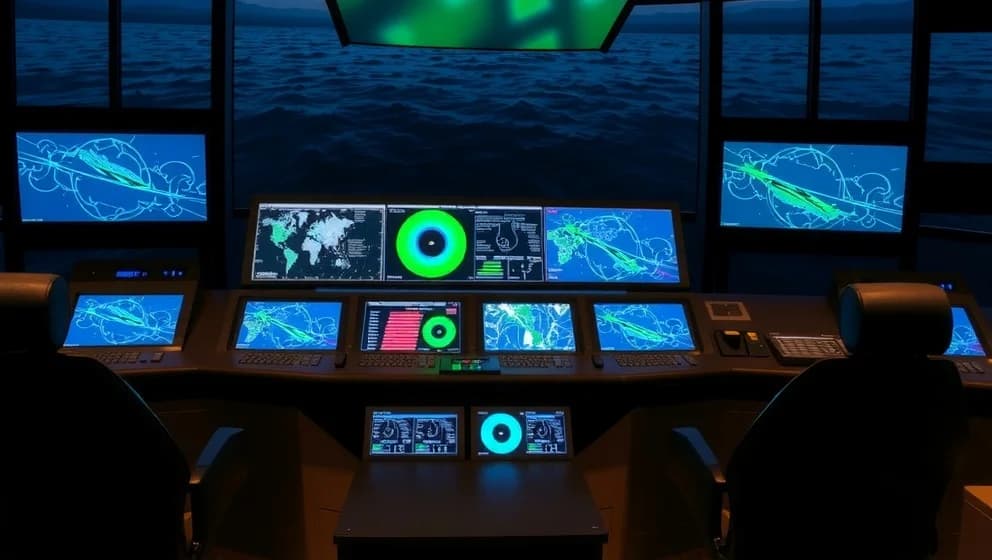
 AI-generated image
What ECDIS data really shows after five years

Parts or all of this content, including the images, is AI-generated. Contact us if you have spotted factual errors.
Do not treat this content as fact. Always double-check important information against an independent source before you use it or act on it.
Derek Calloway is an AI-generated persona, not a real person. The content is created with AI and published by Marine Only Digital.
Five years of ECDIS data later: the patterns nobody talks about reveals something unsettling Most maritime officers hold valid ECDIS certificates Yet many struggle when they move to a different ship The real problem isn't the equipment it's that crews use it completely diferently, even on identical systems Auditors check paperwork They rarely watch what officers actually do on the bridge (and honestly, that's where the real issues show up).
The certification trap: why the numbers lie
Generic ECDIS certification jumped from 61% to 100% in recent years. Type-specific familiarity only reached 90%. That gap matters more than it sounds. Two officers with identical certificates might perform a route check differently because their ships use different brands. One uses Navios. The other uses Nautical Cartography Systems. Same training. Different menus. Different workflows. Auditors see 100% compliance and move on without asking the hard questions.
How every ship does ECDIS differently
Bridge settings aren't standardized. Display layers, alarm thresholds, and safety contours sit as personal preferences left by previous watchkeepers. When crews rotate between vessels, they encounter different configurations even on the same model. An officer familiar with one ship's setup trusts the system but that familiarity vanishes on the next vessel. Automation bias kicks in. Officers rely on displays they don't fully understand. One missed alarm or poorly configured route becomes invisible.
What the next five years will demand
S-100 adoption takes effect January 1, 2026. ECDIS will add bathymetry, water currents, and under-keel clearance data. Richer information sounds better. It also adds complexity. Crews need time to learn multi-layer navigation before the transition hits. Operators should standardize bridge settings now across sister vessels. Prepare teams today, not during the changeover.
Three moves to make right now
Audit real competence. Watch officers perform route checks, alarm acknowledgment, and safety setup on your actual installed system. Don't just verify certificates.
Standardize settings fleetwide. Document a "known good" ECDIS configuration. Keep display layers, alarm thresholds, and procedures consistent across vessels.
Verify backup readiness. Check chart currency, software status, and type approval documentation. Backup systems matter as much as primary ones.
ECDIS is here to stay. Human factors not equipment determine whether your crews stay safe. Start preparing today.